Halfway through the first volume of The History of the Decline and Fall of the Roman Empire (1776), Edward Gibbon took up the case of Zenobia, the famous queen of the Syrian city of Palmyra. “Modern Europe has produced several illustrious women who have sustained with glory the weight of empire,” Gibbon acknowledged, before generalizing that women are not usually known for heroism or leadership. They are instead limited by “the servile indolence imposed on [their] sex.” Zenobia was the exception that proved the rule. Decisive and strong, she rode on horseback rather than being borne on a palanquin, earning Gibbon’s highest praise: The vigorous queen was manful. “Instead of the little passions which so frequently perplex a female reign, the steady administration of Zenobia was guided by the most judicious maxims of policy.”
It is usually a mistake to apply contemporary standards to a writer who lived centuries ago. To put Gibbon’s views in context, several months after he published those words about Zenobia, Thomas Jefferson completed the Declaration of Independence despite owning an estate in Virginia worked by hundreds of slaves. Yet as the late historian Martha Saxton (1945–2023) writes in a new biography (her final book), Gibbon’s otherwise unprejudiced history is full of “gratuitous venom” toward women. The preoccupation is confounding, as it set Gibbon apart from other Enlightenment historians and thinkers like Voltaire, who complimented women in their writing.
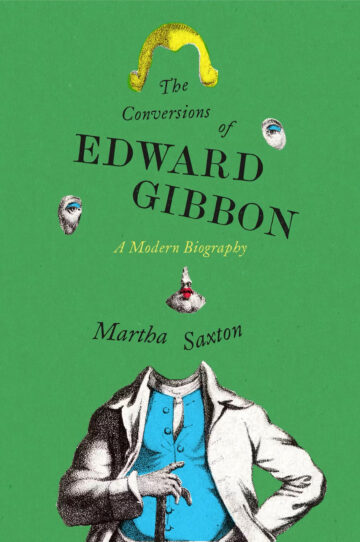
What caused his misogyny? Saxton, the author of biographies of Mary Washington and Louisa May Alcott, set out to find the answer in The Conversions of Edward Gibbon. The subject is a surprising choice for a feminist historian—Gibbon was a hidebound exemplar of British patriarchy whom James Boswell called “an ugly, affected, disgusting fellow.” Two points seem to have piqued Saxton’s interest. One is personal sympathy. Gibbon grew up a lonely little boy with few friends who sustained himself by reading. The other draw is the enormously influential Decline and Fall, one of the greatest works of literature in the English language—a book, Saxton writes, that is full of “epic research, judicious balancing of evidence, fluency in the classics, and shrewd biographical sketches.” She decided that its author, and his prejudice, were worth understanding.
The resulting book is not a literary analysis of Gibbon’s masterpiece but an elegant, witty, erudite life of its creator. Saxton finds much to admire and seems to like her subject, even as she punctures his blimpish excesses. He was born in Surrey “an abnormally tiny and misshapen baby” who “suffered an array of baffling ailments that arrested his growth”; as an adult he would stand four foot seven and was covered in scars. His mother died when he was a child, and he spent the rest of his life trying to earn the approval of his father, who repaid his son’s devotion by sending him away on long tours of Europe and plotting to steal his inheritance.
A series of maternal figures arrived, from a beloved aunt to a kindly stepmother. Saxton writes that Gibbon found pretty, young women “unnerving,” so these matrons offered the pleasure of female company without the burden of sexual anxiety. Yet although he was a confirmed bachelor, Gibbon did have one great romantic pursuit: He courted and planned to marry Suzanne Curchod but ended up jilting her. Saxton parts company with Gibbon’s biographer D. M. Low, who lets his subject off the hook by calling Curchod “over-possessive.” Another interpretation, Saxton writes, is that Gibbon perhaps “wasn’t prepared for candid criticism from an alert and observant young woman.”
During the Seven Years’ War, Gibbon served as a captain in the British army. He never saw action but nevertheless displayed a haughty superiority over his men and an affinity for the splendors of the parade ground. Saxton contends that during his military service, Gibbon picked up some of the vices and prejudices that would dominate his later life, including drunkenness and sexism. These attitudes also imbued his circle of British expatriates—Gibbon called them “the nation”—whose pastimes included binge drinking and visiting brothels. His reading habits shaped his outlook as well; the Latin poet Juvenal’s Satire VI catalogs vanity and infidelity, among other feminine vices. Gibbon’s journal entries show him sneering at the women he met in society as petty and affected.
Even as he struggled to maintain enduring female relationships, Gibbon enjoyed deep, ardent friendships with men. He deplored effeminacy—contending that it, alongside religion, had helped bring down the Roman Empire—but held fast to the men in his life, including his companion, Georges Deyverdun. The two men lived together for about six years, but Saxton finds no evidence that this or any other male pairings turned physical. She asserts, rather, that what mattered was “not whom Gibbon wished to have sex with, but whom he could love.”
Trying to separate the art from the artist is an age-old preoccupation. Often it proves impossible, or merely a fool’s errand. Yet when the artist is a historian, the stakes change. Gibbon was not some poet who happened to be a sexist in his personal life; the literature he produced was nonfiction, and his blinkered opinions therefore shaped readers’ views of his subject. Saxton helps us see that though these limitations by no means disqualify Gibbon from the shelf, they are worth remembering before blithely accepting his judgments. Zenobia, in other words, was probably not the only notable ancient queen.